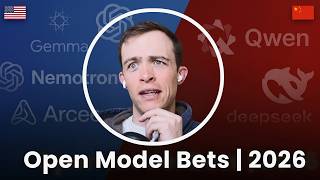
看影片(在新分頁開啟原站)連到 YouTube・Interconnects AI
摘要
Nathan Lambert 整理 2026 年關於開源大模型的系列文章,分析為何目前開源與閉源模型能力接近平衡,但未來經濟模型與分發網路將成為關鍵。他認為開源模型應轉向自動化任務與低成本專用模型,而非直接競爭閉源模型的知識工作優勢,並探討了地緣政治與資金結構對生態系的影響。
Nathan Lambert synthesizes his 2026 writings on open LLMs, arguing that while capability gaps are narrowing, economic distribution and specialized low-cost models will define the future ecosystem over direct competition with closed models.
摘要、重點與章節標題由語言模型整理,細節(誰說的、數字、先後)可能有誤;要引用請以原始內容為準。
重點
- 開源與閉源模型目前能力接近,但閉源在真實場景測試上更具優勢。
- 未來開源模型應專注於自動化任務與極致低成本,而非全面競爭。
- 政府監管與資金結構將推動開源模型走向聯盟化與去中心化。
章節
依話題轉折切分,標題由 AI 產生
提到的工具與公司
適合誰看
適合 AI 產業從業者、開源模型開發者、政策研究者與對大模型商業模式感興趣的讀者。
摘要依據
- 講者
- Nathan Lambert
- 依據
- 自動字幕
為什麼排在這裡
- 人氣
- 0.09
- 新鮮
- 0.42
在主題頁與搜尋結果裡,名次由相關、人氣、新鮮三個分數決定;這一頁沒有搜尋的關鍵字,所以沒有相關分數。排序怎麼算
相關內容
- My bets on open models, mid-2026Podcast ・ Interconnects ・ 7 分鐘 ・
- What comes next with open modelsPodcast ・ Interconnects ・ 18 分鐘 ・
- The State of the Open Frontier文章 ・ Maxime Labonne ・
- Teaching Everyone to Fish for Tokens文章 ・ Nathan Lambert(部落格) ・
- Open Models: Kimi K3, Qwen 3.8, Xi's WAIC Speech, Distillation, The Open-Closed Gap, and What's Next影片 ・ Interconnects AI ・ 49 分鐘 ・
- Inside vLLM: The Engine Powering Open-Source AIPodcast ・ AI + a16z ・ 47 分鐘 ・
這個來源最近的內容
摘要由 AI 根據原文產生,可能有誤;完整內容請看原站。看影片(在新分頁開啟原站)